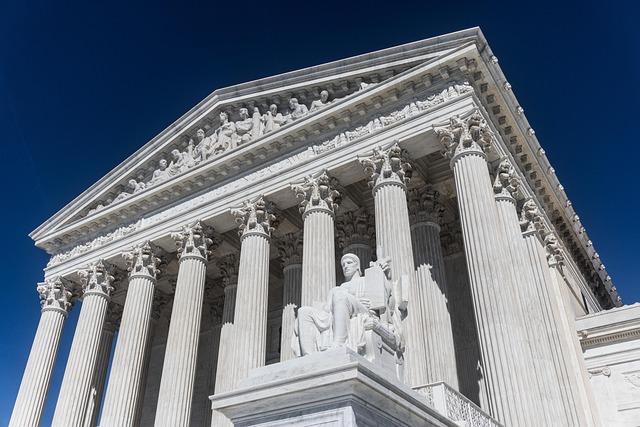
In a ruling on gerrymandering issued this week, the U.S. Supreme Court sharply limited the circumstances under which federal courts can overturn legislative maps on racial grounds – a change civil‑rights advocates say will wind back decades of progress toward electoral equality. By narrowing the legal tests for when race predominates in map‑drawing, the decision makes it harder for challengers to prove that minority communities have been unlawfully packed or cracked. Voting‑rights groups warned the opinion will permit states to adopt district lines that dilute the influence of Black, Latino and other minority voters; the Court’s majority said it was restoring appropriate limits on judicial intervention in politically fraught mapmaking. The ruling promises to reshape the landscape of upcoming elections and intensify battles over the role of race in American democracy.
Supreme Court decision on gerrymandering set to erode electoral influence of Black and Latino communities in swing states
The Supreme Court’s ruling this week recalibrates the legal standards courts use to review map-drawing, a shift that civil-rights advocates warn will blunt the political voice of Black and Latino voters in key battlegrounds. By narrowing the avenues for federal intervention and elevating intent-based proof over demonstrable harm, the decision effectively makes it easier for legislatures and partisan mapmakers to fragment communities of color and convert competitive districts into safe seats for one party. Observers say the immediate consequence will be fewer meaningful contests, diminished legislative responsiveness to minority communities, and a rollback of gains made since the Voting Rights Act-era reforms.
Local officials and advocates in swing states are already recalculating: staffing for voter outreach and litigation is being redirected toward damage control, while advocacy groups prepare new strategies to preserve representation. Key implications include:
- More split communities: Multiethnic neighborhoods face being cracked across districts.
- Fewer competitive districts: Electoral churn that previously allowed diverse coalitions to win will be reduced.
- Heightened legal uncertainty: Plaintiffs will confront steeper burdens to prove racially discriminatory effects.
| State | Community Most Affected | Seats at Risk (estimate) |
|---|---|---|
| Georgia | Black voters | 2 |
| Arizona | Latino voters | 1 |
| North Carolina | Black voters | 2 |
| Pennsylvania | Black & Latino voters | 1 |
Opinion undermines core voting rights doctrines and empowers partisan mapmakers to dilute minority representation
The Court’s opinion strikes at the heart of long-established voting-rights protections, weakening the doctrinal tools judges relied upon to scrutinize racial gerrymanders and partisan abuses. Legal standards that balanced intent and effect – and that once allowed courts to remedy maps that diluted minority voting strength – are now narrowed, leaving plaintiffs with a steeper hill to climb. Practitioners warn that the decision recalibrates how constitutional and statutory claims are evaluated, substituting bright-line protections with discretionary inquiries that favor mapmakers who mask partisan objectives as neutral districting choices.
That legal shift immediately hands leverage to state legislators and consultants who design districts, increasing the risk that minority communities will be fragmented or overconcentrated to blunt their influence. Observers expect a rapid rollout of maps that exploit the new limits on judicial review, producing fewer competitive seats and diminished representation for communities of color. Key practical effects include:
- Cracking: dispersing minority voters across districts to prevent them from forming a majority.
- Packing: concentrating minority voters into a small number of districts to waste their votes.
- Coalition disruption: redrawing lines to break alliances between minority groups and sympathetic voters.
| Map tactic | Likely impact on minority representation |
|---|---|
| Cracking | Fewer seats, diluted influence |
| Packing | Wasted votes; reduced influence statewide |
| Line-drawing opacity | Harder to prove discriminatory intent in court |
Policy response and legal strategies to blunt the damage: restore federal voting protections, establish independent redistricting commissions, and expand strategic litigation and community organizing
The political and legal response to the court’s decision has already begun to take shape in statehouses and courtrooms. Advocates and some lawmakers are pushing for Congress to restore federal voting protections-including a modernized preclearance regime and new anti-dilution standards-while governors and legislatures in several states are moving to enshrine independent redistricting commissions into law to remove direct legislative control over maps. At the same time, civil rights groups are reallocating resources to bolster state constitutional challenges, expand Section 2 voting-rights litigation where viable, and accelerate public records and mapping investigations to document partisan and racial gerrymanders before the next round of redistricting.
- Federal fixes: Renewed Voting Rights Act language, preclearance reborn, stronger DOJ enforcement.
- Institutional reform: Independent commissions and transparent, data-driven mapmaking rules.
- Legal strategy: Strategic state-court cases, coordinated amicus briefs, and targeted Section 2 suits.
- Organizing & resources: Grassroots mobilization, litigation funding pools, and civic-technology partnerships for evidence.
Lawyers and organizers describe a two-track approach: aggressive litigation to blunt immediate harms and durable structural reforms to prevent recurrence. In the short term, state judges are becoming critical venues for relief as federal remedies narrow; long-term success will depend on sustained community organizing, bipartisan state reforms, and federal legislation that can withstand judicial scrutiny. The playbook now being circulated among rights groups stresses rapid data collection, coalition-building across racial and issue lines, and a mix of legislative campaigns and high-impact lawsuits aimed at protecting representation ahead of the next census cycle.
| Strategy | Immediate action | Lead actors |
|---|---|---|
| Federal protections | Draft updated preclearance bill | Congress, civil-rights coalitions |
| Independent maps | Campaign state ballot measures | State advocates, reform groups |
| Strategic litigation | File state constitutional claims | Legal nonprofits, local plaintiffs |
The Conclusion
The court’s decision marks a turning point with immediate and long-term consequences: maps that judges previously found to protect minority voting power may now be upheld or redrawn, and communities of color could see diminished representation in state and federal legislatures. Civil-rights groups and Democratic lawmakers have pledged to challenge or counter the ruling through state courts, new legislation and the next round of redistricting, but those efforts face an uncertain path. For voters and advocates who have regarded fair districting as central to racial justice, the ruling narrows legal tools that had helped secure gains, leaving the task of defending those gains to the political and legislative arenas. How quickly-and how effectively-those actors respond will determine whether the decision is a temporary setback or a longer-term rollback of racial justice in American politics.