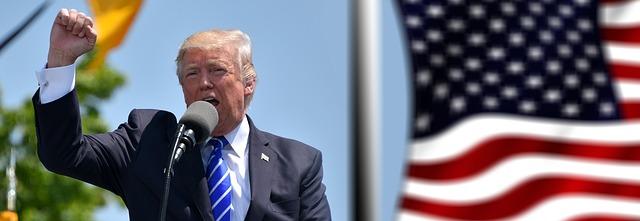
When former president Donald Trump starts moving to music – whether stepping, swaying or striking a pose at a rally, fundraiser or victory celebration – the clip rarely stays private for long. Short videos of his feet, hands and signature facial expressions have become viral fodder, sparking everything from memes to earnest debate about what those movements say about the man behind the podium.
In the latest round of scrutiny, a handful of body‑language experts told reporters they see patterns in those moments: deliberate staging and display, cues aimed at rallying a base, and flashes of emotion that land differently depending on the viewer. Their readings touch on posture, timing, eye contact and the use of space – nonverbal signals political operatives have long known can shape public perception as much as words.
This article unpacks those interpretations, weighing expert commentary against the footage that has captured the public imagination, and explores why a few seconds of dance can become a potent piece of modern political theater.
Why Trump’s Dance Moves Matter: Body Language Experts Decode Gesture Rhythm Posture and Stagecraft
On a stage crowded with slogans and camera angles, physical movement becomes political grammar: every step and shrug can rewrite a narrative. Body language analysts say the candidate’s gait, tempo and signature gestures act as shorthand for energy, dominance and sincerity – cues that travel faster than speeches. Experts point to recurring motifs that shape voter impressions:
- Sidestep: creates motion without commitment, signaling control of space.
- Hand flap: conveys impatience or dismissiveness when paired with a narrowed gaze.
- Slow pivot: stages a reveal, directing cameras and crowd reactions.
- Leaning handshake: blurs the line between intimacy and assertiveness.
These motions are not random; they are part choreography, part instinct, and together they modulate credibility in real time.
When decoded, the moves reveal a deliberate interplay of posture, rhythm and stagecraft that fuels headlines and soundbites. Analysts emphasize timing – a beat too long or too brisk can flip a moment from commanding to awkward – and note how entourage spacing and lighting amplify perceived intent. The following snapshot shows how commonplace gestures translate into quick public narratives:
| Gesture | Perceived Signal | Typical Media Spin |
|---|---|---|
| Broad arm sweep | Confidence, showmanship | “Commanding the room” |
| Rapid head nods | Urgency, agreement | “Pacing the message” |
| Short backstep | Deflection, recalibration | “Avoiding the issue” |
Read together, these signals explain why a few seconds of movement can matter as much as a soundbite in shaping voter sentiment and the nightly news agenda.
What His Facial Expressions Footwork and Hand Signals Reveal About Confidence Stress and Message Control
Reporters and body-language analysts watching the former president say his face often works like a teleprompter for emotion: a practiced, clipped smile that reads as command performance, a compressed jaw or pursed lips that betray tension, and rapid, strategic eyebrow flicks that punctuate a line and signal control. Footwork tells a parallel story – a planted stance and forward steps designed to project certainty, interspersed with quick shifts and pivots that can indicate impatience or the effort of managing nerves. Hand signals function as punctuation marks; pointing and air-grabbing reinforce assertions, open-palmed gestures invite trust, and repetitive finger-tapping or grip adjustments are small, involuntary disclosures of stress that undercut spoken confidence.
Experts say the overall effect is purposeful stagecraft, but with predictable human leaks: the more tightly choreographed the move, the more visible the microtells that reveal strain or intent. Key cues to watch for include:
- Tight smile: practiced control, often masking discomfort
- Raised eyebrow: emphasis, sometimes skepticism or challenge
- Shifted weight/pacing: impatience or emotional arousal
- Pointing gestures: assertiveness and message ownership
- Repeated tapping: stress or cognitive load
| Signal | Likely Read |
|---|---|
| Open palm | Reassurance/appeal |
| Short forward steps | Drive/authority |
| Jaw clench | Controlled tension |
How To Watch and What To Watch For Practical Tips From Analysts on Decoding Politicians’ Movements and Spotting Performance Tricks
Veteran analysts say the first rule is establish a baseline: watch a minute of unscripted footage to learn what is *normal* for the speaker, then spot deviations. Focus on timing and symmetry – is a gesture synchronized with a sentence or an applause cue, or does it repeat mechanically like a rehearsed move? Use slow motion and freeze-frame tools to catch micro-timing, watch eye contact for the split second a hand moves, and pay attention to the camera framing: what looks natural on stage can read as exaggerated on close-up. Context beats impression – a flourish that energizes a rally may be a calculated cue in a debate, so always note the setting and the intended audience.
Practical checks from body-language specialists include quick steps you can apply in real time or while fact-checking footage:
- Baseline – compare with off-stage behavior to identify stage-crafted moves.
- Repetition – repeated, identical gestures often signal choreography, not spontaneity.
- Synchrony – mismatches between voice, eyes and hands can indicate a practiced performance.
| Gesture | What to Look For | Quick Tip |
|---|---|---|
| Rhythmic sway | Repeated timing with music/applause | Replay at 0.5x speed |
| Pointing thrust | Directed at group vs individual | Check gaze direction |
| Facial freeze | Short micro-expression mismatch | Compare with candid clips |
Concluding Remarks
Whatever one makes of the spectacle, body-language specialists say the unusual choreography is less a mystery than a deliberate performance choice: a mix of practiced showmanship, attention-seeking signals and audience-targeted cues that reinforce the persona Mr. Trump projects onstage. Analysts caution, however, that reading meaning into isolated gestures carries limits – posture and movement are shaped by context, intention and the flow of an event, and nonverbal cues do not translate into airtight psychological profiles.
For voters, journalists and pundits alike, the takeaway is pragmatic. The way a public figure moves can be as communicative as what they say, shaping perceptions in real time and on social media. But if anyone hopes to decode a definitive motive behind a particular step or sway, experts advise patience: patterns matter more than single moments, and future appearances will tell whether this is a sustained communicative strategy or another attention-grabbing episode in a long, carefully staged public life.