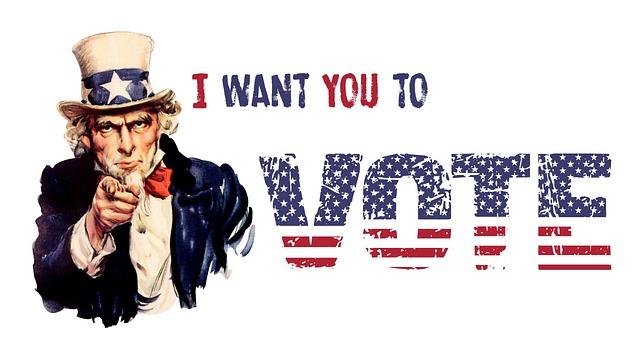
Midterm elections are often described as a referendum on the White House – a routine check that can trim a president’s mandate without upending the system. Yet in American political history two midterms stand out for doing far more than delivering a message: they helped usher in new eras, redraw party coalitions and reset the rules of governance.
The 1934 midterms solidified Franklin D. Roosevelt’s New Deal coalition, delivering rare midterm gains for a sitting president and giving congressional allies the breathing room to expand federal relief and regulation during the Great Depression. Sixty years later, the 1994 elections produced a seismic reversal: Republicans, running on Newt Gingrich’s “Contract with America,” captured the House for the first time in 40 years, inaugurating a conservative legislative agenda and a more confrontational style of partisan politics.
This article examines how those two midterms-one that strengthened executive-led reform, the other that empowered a disciplined legislative opposition-reconfigured power in Washington and reshaped American politics for decades to come.
Republican Revolution remade congressional power and policy priorities and what party leaders must change to restore effective governance
The 1994 midterm upended decades of congressional practice by delivering the House to Republicans and putting a renewed emphasis on agenda control, committee power and messaging discipline. The new majority rewired committee jurisdictions, prioritized spending cuts and welfare reform, and used oversight as a central policy tool. That shift transformed Capitol Hill norms: regular order gave way to leadership-driven packages, partisanship hardened around strategic media narratives, and the legislative calendar increasingly reflected electoral imperatives rather than deliberative lawmaking. The result was a durable realignment in how Congress sets priorities and markets its successes to voters.
To rebuild a functioning majority that can legislate, party leaders must recalibrate incentives and institutional rules to reduce polarization and restore capacity. Key changes include:
- Restore regular order – empower committees to draft legislation and hold hearings before floor consideration.
- Reinstitute expertise – invest in staff policy teams to reduce reliance on outside groups for drafting.
- Limit punitive primaries – reward coalition-building over purity tests to widen bargaining space.
- Rebalance messaging and legislating – prioritize durable policy wins alongside electoral communication.
| Action | Immediate effect |
|---|---|
| Committee autonomy | Better policy detail |
| Staff investment | Faster, more credible bills |
| Primary reform | Broader coalitions |
These steps would not erase partisan competition, but they would restore the procedural capacity needed for Congress to deliver predictable governance and durable policy outcomes.
Tea Party surge transformed nomination politics and legislative tactics and concrete reforms campaigns and regulators should adopt to curb polarization
The 2010 insurgency remade how candidates win nominations and how Washington operates: what used to be quiet backroom bargains became public tests of ideological purity. In primary contests, grassroots activists and well-funded outside groups displaced party operatives, elevating challengers who promised to punish compromise. That dynamic produced not only a shift to the right within certain House districts but also a new playbook in the chamber-leveraging procedural tools, targeted amendments, and brinkmanship over fiscal deadlines to extract policy wins. The result was a legislature faster to vilify opponents and slower to legislate, with primaries serving as the primary engine of polarization and intra-party enforcement replacing cross-party dealmaking.
To blunt the incentives that fuel such escalation, campaigns and regulators should adopt practical reforms that raise the costs of zero-sum tactics and reward cross-cutting representation:
- Primary reform: implement ranked-choice or top-two systems to reduce pressure for extreme positions.
- Disclosure and coordination limits: close loopholes that allow opaque outside spending and tighten definition of campaign coordination.
- Procedural transparency: require roll-call explanations for major procedural holds and use of special rules.
- Incentives for bipartisanship: public matching funds or debate slots for candidates who engage across the aisle.
| Reform | Short-term effect |
|---|---|
| Ranked-choice primaries | Fewer spoiler dynamics |
| Stronger disclosure | Less dark money influence |
| Procedural reporting | Reduces surprise brinkmanship |
Regulators can enforce these changes through rulemaking and targeted enforcement, while campaigns can volunteer higher standards of transparency; together they would curb the incentives that turned nomination fights into engines of discord and bring legislative incentives back toward compromise.
Lessons from past midterm turning points actionable recommendations for parties election officials and civic groups to protect institutions and rebuild voter trust
Long memories of midterm turning points show that political realignments are not accidents but the product of institutional choices and public perception. To translate those lessons into concrete measures, parties must rebuild local capacity and stop amplifying contested results; election officials should adopt standardized, publicly visible audits and uniform ballot procedures; and civic groups need to scale targeted, multilingual voter education. These actions reduce ambiguity after close races and blunt the spread of disinformation, making election outcomes easier for the public to accept without sacrificing competitiveness or oversight.
- Parties: Invest in down‑ballot candidate pipelines, discipline post‑election rhetoric, and partner on civic outreach.
- Election officials: Mandate risk‑limiting audits, publish chain‑of‑custody logs, and ensure accessible ballot designs.
- Civic groups: Coordinate rapid fact‑checking networks, run local trust‑building forums, and support poll‑worker recruitment.
- Cross‑cutting: Create independent review panels, require transparent communications timelines, and fund community‑level reporting on safeguards.
Concluding Remarks
What these two midterms make clear is that off-year elections can do more than alter a few committee assignments – they can redraw the contours of American politics. By shifting control in Washington, elevating new leaders and movements, and reshaping party coalitions, each contest set a new governing agenda and reframed the national debate for years to come.
Their legacies are visible in the policy battles, electoral strategies and voter coalitions that followed: legislative priorities were reordered, party identities were redefined, and political careers were launched or curtailed. Equally important, both midterms showed how grassroots energy, media environments and broader social and economic currents can converge to produce durable change.
As observers and participants look toward the next midterm cycle, the lessons are clear – eras are often born in what many still call “off-year” contests, and their effects can reverberate long after the ballots are counted. Whether those shifts endure will depend on how parties, leaders and voters respond in the years ahead.