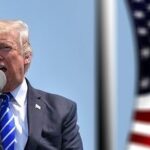
Why the EU‑MAGA Bridge Collapsed: Meloni and Trump Drift Apart
What once looked like the beginnings of a transatlantic conservative compact – an informal EU‑MAGA axis linking Italy’s leader Giorgia Meloni with Donald Trump’s populist movement – has eased into a clear divergence. Early affinities on immigration, national sovereignty and cultural signaling have been overtaken by deeper disagreements over foreign policy priorities, commercial interests and the political calculations of governing versus campaigning. The shift is consequential: it illustrates how difficult it is to sustain an enduring alliance between pragmatic European conservatives embedded in the EU and NATO framework and a reinvigorated American populist right that prizes transactional flexibility.
From Tactical Flirtation to Strategic Separation
Initially, rhetoric and symbolic gestures created the impression of a new political middle ground across the Atlantic. Over time, however, divergent incentives and institutional constraints made that alignment untenable. Meloni’s government – leading a coalition anchored by Brothers of Italy – must balance domestic stability, EU obligations and Italy’s economic ties. In contrast, Trump-aligned forces in the United States are shaped by campaign imperatives and a willingness to prioritize short-term leverage over multilateral cohesion.
Main drivers of the split
- Institutional limits: European leaders operate inside the EU and NATO architecture, which narrows policy maneuverability compared with unilateral U.S. approaches.
- Different political calendars: Governing parties are judged by domestic performance and coalition maintenance; populist movements overseas often reward disruptive spectacle.
- Electoral and reputational risk: Close identification with volatile U.S. politics can erode credibility among centrist voters and international partners.
Where the Fault Lines Run
The relationship fractures most clearly on three policy fronts: relations with Russia, migration policy, and trade strategy. These are not merely rhetorical disputes but reflect competing national interests and contrasting worldviews about how power should be exercised.
Russia: balancing deterrence and economic reality
Rome tends to combine a commitment to collective Western measures with pragmatic attention to Italy’s energy and industrial links. In contrast, many in the MAGA orbit favor rapid transactional deals or unilateral concessions if those advance short‑term strategic goals. The result is little room for a common, long-term Russia strategy that satisfies both sides.
Migration: EU frameworks vs. bilateral deals
Italy pushes for EU-managed response mechanisms – pooling responsibility across member states and pairing border controls with search-and-rescue rules. MAGA-style politics emphasizes strict, bilateral enforcement and immediate deterrence measures. The difference is fundamental: one approach seeks burden-sharing, the other prioritizes sovereign, immediate control.
Trade: rules-based market access versus leverage-driven tariffs
European conservatives, including Meloni, typically defend predictable, rules-based access for small and medium enterprises across the single market. The Trump-aligned playbook too often elevates tariffs, bargaining chips and unilateral impositions designed to recalibrate supply chains quickly. That contrast undercuts any stable economic partnership built on mutual predictability.
| Issue | Meloni / Italy | Trump-aligned MAGA |
|---|---|---|
| Russia | Sanctions-aware pragmatism tied to NATO commitments | Transactional reset and deal-first bargaining |
| Migration | EU-centered, collective solutions and humanitarian protocols | Bilateral returns, hardline enforcement |
| Trade | Rules-based access for European firms | Tariffs and leverage to secure advantage |
Practical Consequences for European and Transatlantic Politics
The unravelling of the EU‑MAGA prospect has immediate diplomatic and political effects. Coordination between like-minded parties across borders becomes more episodic, and transnational networks that relied on synchronized messaging lose potency. Expect a short-term uptick in cautious distancing from Italian officials by some Western capitals, a pivot in media framing by allied movements, and increased space for centrist or pro‑EU forces to reclaim the narrative.
Real-world implications
- Reduced likelihood of coordinated electoral endorsements across the Atlantic.
- Heightened scrutiny in Brussels over any bilateral agreements that might undermine EU policy.
- Smaller populist groups within Europe may fracture as they decide whether to prioritize domestic governance or transatlantic solidarity.
How Rome and Brussels Can Rebuild Credibility
If European conservatives wish to preserve influence while distancing themselves from volatile U.S. theatrics, they need to translate political language into consistent policy frameworks. That means clarifying Russia-related thresholds, harmonizing trade instruments and crafting a migration narrative that pairs firm border management with safe, legal pathways.
Concrete steps to pursue
- Define sanctions benchmarks: set clear, publicly understood triggers for escalation or relief to reduce ambiguity.
- Align trade policy tools: develop coordinated export controls, investment-screening norms and procurement standards to protect strategic industries without fragmenting the single market.
- Unify migration messaging: present a shared EU-Italy framework that combines deterrence with humanitarian commitments and orderly resettlement options.
- Institutionalize party-to-party dialogue: create regular, formal forums for conservative parties and think tanks across the Atlantic so relationships are institutional rather than personality-dependent.
Looking Ahead: Fragmentation or Reconfiguration?
The Meloni‑Trump cooling signals a transition, not necessarily a terminal rupture. Two paths are plausible. One is further fragmentation: national conservatives retreat into domestically focused agendas, diluting cross‑border cooperation. The other is reconfiguration: Europe’s center-right could preserve ties with U.S. counterparts by building procedure-based mechanisms – trade protocols, joint research initiatives, parliamentary exchanges – that survive political volatility.
Either way, the EU‑MAGA experiment demonstrates an enduring truth of modern geopolitics: alliances built primarily on personality and rhetoric are fragile. Durable partnerships require institutional anchors and convergent incentives. As electoral cycles in the United States and Europe proceed, observers will watch whether transatlantic right‑wing networks mend themselves into a rule‑based partnership or dissipate into competing national projects.