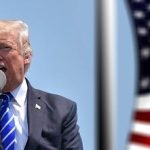
Trump Administration Announces Controversial Framework to Operate Venezuelan Oil Reserves
President Donald Trump has endorsed an agreement – described by some international media as historic – that would place operational control of roughly 65 billion barrels of Venezuelan oil reserves under U.S.-led management. If implemented, the arrangement would reshape regional geopolitics, influence global energy markets and ignite complex legal and diplomatic debates over Venezuelan sovereignty.
What the pact would do
According to a brief White House summary, the plan would allow a U.S.-headed consortium to manage extraction and export infrastructure in Venezuelan fields under a time-limited concession while leaving nominal domestic institutions in place. The administration framed the move as a strategic effort to lock in access to a major hydrocarbon resource and to reduce the ability of rival powers to extend their influence in the Western Hemisphere.
- Estimated recoverable resource: ~65 billion barrels of oil reserves (roughly 3-4% of global proven reserves, which total about 1.7 trillion barrels).
- Operating model: Consortium-led management with a fixed-term concession and an interim revenue-sharing mechanism.
- Timeline: Officials released a short timetable indicating rapid implementation and immediate coordination with major energy firms and allied governments.
Immediate implications for markets and supply chains
Energy traders and refiners are already weighing how a sudden shift in Venezuelan crude flows could affect pricing and logistics. Although 65 billion barrels is a large strategic holding, turning reserves into usable supplies depends on technical capacity, investment, and sanctions-related legal clearances. For context, U.S. domestic petroleum consumption is on the order of about 20 million barrels per day, while global oil consumption sits near 100 million barrels per day – meaning Venezuelan reserves are strategically significant but would not instantly transform daily market balances.
Operational realities matter: much of Venezuela’s crude is heavy and sour, requiring specific refinery configurations and blending strategies. Analysts warn that without coordinated planning, rapid changes in trade patterns could produce short-term dislocations – localized fuel shortages, port bottlenecks, and price swings – similar to what happens when a major traffic artery is rerouted into a congested urban center.
Industry guidance being circulated
- Map refinery compatibility and monthly throughput to identify where heavy Venezuelan crudes can be processed.
- Secure diversified supplier contracts to mitigate reliance on any single crude source.
- Run logistics stress tests for transport, storage and terminal capacity under surge scenarios.
- Coordinate compliance procedures to reconcile licensing with current sanctions and export controls.
- Conduct cross-sector operational drills to test rapid crude-slate changes and product allocation shifts.
Legal, diplomatic and political risks
Former diplomats, legal scholars and energy strategists have raised numerous concerns. They emphasize the potential for international litigation, retaliation from countries allied with Caracas, and reputational harm for companies involved in state-linked ventures.
Key risks identified by experts include:
- Escalation risk: Greater U.S. presence in Venezuela’s energy sector could prompt diplomatic or economic countermeasures from adversarial states.
- Sanctions and legal ambiguity: Conflicting national and international sanctions regimes may create exposure for U.S. firms and financial institutions.
- Political and reputational fallout: Partnerships with entities tied to the Venezuelan state could elicit investor, NGO and allied-government scrutiny.
Suggested congressional and oversight steps
Think tanks and congressional aides are pressing for immediate oversight to limit unintended consequences. Recommended actions include:
| Perceived danger | Proposed response |
|---|---|
| Diplomatic backlash | Hearings by Foreign Affairs and Intelligence committees |
| Sanctions conflicts | Comprehensive sanctions review and legal opinion to clarify waivers |
| Corporate exposure | Audits of licenses, contracts and U.S.-based corporate participation |
Without prompt congressional scrutiny and clear statutory or executive authorizations, experts warn the administration could be left with fewer tools to manage fallout from legal challenges or retaliatory measures.
International reaction and regional consequences
Allies and rivals alike will watch closely. Latin American governments have historically reacted sensitively to external control over their neighbors’ natural resources; a deal that places large swaths of Venezuela’s oil under foreign operational control could recalibrate alliances across the region. International organizations, human-rights groups and energy watchdogs are also likely to weigh in, assessing both the humanitarian and environmental implications of accelerated extraction.
Global energy markets will factor in the eventual scale and timing of any new Venezuelan flows. Even with substantial reserves, the real-world impact depends on investment in production capacity, repairs to aging infrastructure, and the resolution of legal and logistical barriers.
Longer-term outlook
The proposed framework represents a strategic gamble: proponents argue it secures energy access and counters foreign influence; critics describe it as a potential infringement on sovereignty that could intensify geopolitical tensions and legal disputes. Over the coming weeks and months, Congress, international tribunals, and the Venezuelan government will likely define the practical reach of the arrangement.
For industry participants, policymakers and market observers, the near-term priorities are transparent: clarify the legal basis for operations, audit refinery and port readiness, and coordinate contingency plans to reduce market disruption. As the situation develops, the international community will be monitoring how swiftly operational plans are translated into flows – and whether those flows stabilize or further destabilize an already complex regional landscape.