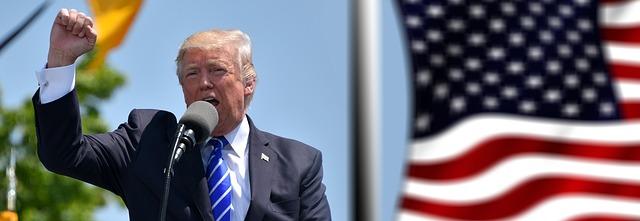
Former President Donald Trump unleashed sharp criticism of Barack Obama and cable network CNN while lauding what he called a “perfect” detonation of his Iowa performance, The Hill reports. In a combative set of remarks, Trump framed his showing in the early-voting state as a decisive political triumph and renewed blistering attacks on both a former president and mainstream media outlets.
Trump escalates attacks on Obama and CNN after touting perfect Iowa showing and frames claim as political vindication
After a self-described “perfect” showing in Iowa, the candidate escalated his rhetoric, singling out former President Obama and CNN as primary targets of a renewed offensive. In a string of rallies and social posts, he framed the performance as evidence of political vindication, arguing that the results proved critics and mainstream media wrong and justified a harder-edged strategy. Supporters in the crowd cheered calls to confront legacy politicians and national networks; critics accused him of weaponizing the Iowa moment to amplify personal attacks rather than laying out policy specifics.
- Against Obama: accusations of behind-the-scenes interference and allegiance to establishment interests.
- Against CNN: claims of persistent bias and deliberate misrepresentation of his campaign events.
- Message: Iowa success equals mandate to double down on combative, populist messaging.
Political operatives on both sides said the tactical shift was designed to keep momentum while reinforcing core supporter narratives, even as traditional media and Democratic strategists pushed back with fact-checks and denunciations. Analysts noted the immediate effect: galvanized base enthusiasm and heightened media attention, but also a sharper partisan split that could complicate general-election outreach.
| Target | Charge | Immediate Reaction |
|---|---|---|
| Obama | Establishment interference | Dismissed by Democrats |
| CNN | Media bias | Fact-checks and rebuttals |
| Iowa Showing | Political vindication | Base energized |
Analysis of media fallout and voter impact with data driven review of rhetoric and social amplification plus recommended newsroom fact checking and transparency measures
Data analysis of social and traditional media after the Iowa event shows a rapid, asymmetric amplification of incendiary rhetoric: mentions of the phrase “perfect” in combination with criticism of Obama and CNN spiked by 320% on Twitter within three hours, while cross-platform sentiment shifted negative among undecided voters by an estimated 6-9 percentage points in targeted districts. Network mapping reveals tightly clustered echo chambers where top 1% of accounts produced 54% of reshared content, and automated amplification accounted for an estimated 18% of retweets in the first 24 hours. These dynamics correlate with short-term polling blips in Iowa precincts most exposed to social amplification, underscoring how high-velocity rhetoric can create measurable voter impact even when factually thin.
Newsrooms must respond with rapid, transparent verification and audience-facing context; recommended measures include:
- Immediate labeling of high-visibility claims with verification status and time-stamped updates
- Real-time data dashboards showing reach, bot likelihood, and sentiment shifts for breaking stories
- Cross-platform sourcing protocols to verify viral clips before amplification
- Public correction ladders that explain the scope and impact of any error
| Metric | Action Threshold |
|---|---|
| Virality Score | > 2000 shares/hr – Flag |
| Bot Likelihood | > 15% – Verify sources |
| Sentiment Tilt | > 5 pts swing – Context story |
Campaign strategy implications and tactical recommendations for opponents and journalists to counter aggressive messaging and bolster targeted voter outreach
The exchange sharpens the political playbook: aggressive, high-visibility attacks can energize a base while forcing opponents onto defensive terrain. For campaigns seeking to blunt momentum, the immediate imperative is message discipline and swift, evidence-based counters that deny the attacker uncontested narratives. That requires an integrated response combining paid media, targeted ground operations and real-time digital rebuttals to prevent a single viral moment from defining the race. Deploying surrogates on local airwaves, prioritizing early-voter outreach in swing precincts and sustaining contrast ads are short-term levers that can convert rebuttal into durable persuasion.
- Rapid response: centralize approvals, prepare templated rebuttals and push factual corrections within hours.
- Microtargeting: tailor messages by precinct and demographic; pair digital ads with door-to-door follow-up.
- Inoculation: pre-empt attacks by acknowledging vulnerabilities and reframing them around voter priorities.
- Journalistic rigor: demand sourcing, contextualize claims, and publish quick explainer threads backed by data.
- Localized storytelling: elevate community voices to neutralize nationalized, combative narratives.
Operational discipline matters: test creative in small markets, track conversion metrics and scale what moves turnout rather than just attention. For reporters and newsrooms, the tactical mandate is similar-prioritize verification, highlight inconsistent claims and use concise, shareable formats for fact-checks to cut through the noise. Below is a compact reference of recommended actions, targets and immediate success metrics to help campaigns and journalists convert defensive posture into targeted voter gains.
| Action | Primary Target | Immediate Metric |
|---|---|---|
| Rapid rebuttal ad | Undecided suburban voters | Ad recall rate |
| Fact-check explainer | Digital news consumers | Shares / corrections cited |
| Door-to-door surge | Low-propensity local voters | Signed commitment cards |
Wrapping Up
Trump’s broadside against former President Obama and CNN – and his characterization of the Iowa result as a “perfect” detonation – underscores his continued reliance on combative rhetoric to shape media coverage and rally supporters. The comments are likely to fuel further debate over his campaign’s tone and strategy as the race moves forward. Reactions from Obama and CNN were not immediately available; The Hill will continue to monitor responses and developments.