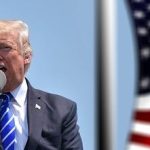
Trump Announces Drive for Negotiated Halt to Fighting in Ukraine After G7 Sideline Meeting with Zelenskyy
Former president Donald Trump told reporters after a short, highly visible encounter with Ukrainian President Volodymyr Zelenskyy at the G7 that he intends to advocate for renewed diplomacy to end the war in Ukraine. The exchange, which took place on the margins of the summit where leaders continued to coordinate support for Kyiv, immediately put the spotlight on what a U.S.-led push for talks might mean for allied policy, Kyiv’s security demands, and Moscow’s willingness to participate.
What Happened at the G7 Sideline Meeting
The meeting between Trump and Zelenskyy was brief but consequential in tone. Trump said he would “press for peace” and encourage all sides to return to negotiations, stressing results-oriented diplomacy over a continuation of large-scale military campaigns. Zelenskyy responded cautiously: Ukraine signalled that it is open to credible, enforceable pathways that protect the country’s territorial integrity, while insisting that any discussion must include tangible security guarantees and mechanisms to hold aggressors to account.
Key takeaway points from the encounter
- Trump publicly positioned himself as an advocate for renewed talks aimed at stopping active hostilities.
- Kyiv reiterated that negotiations must not compromise Ukraine’s sovereignty and must come with enforceable protections.
- Allies and analysts immediately began weighing the implications for existing support packages and multilateral strategy.
Proposals Highlighted by Trump
According to his statement, Trump is prioritizing a practical negotiation framework that could include:
- Immediate proposals for localized ceasefires or humanitarian pauses;
- Phased security assurances that would evolve as compliance is verified;
- Conditional easing of sanctions tied to measurable commitments;
- Coordinated multinational mediation and monitoring to oversee any agreement.
How these ideas would be translated into binding measures – and whether Washington, European capitals, and Kyiv would accept them – remains an open question. Observers pointed out that the credibility of any settlement will depend on independent verification and clear consequences for violations.
Responses from Allies, Kyiv and Analysts
Reactions ranged from guarded optimism to scepticism. Some Western officials welcomed renewed diplomacy so long as it reinforced deterrence; others warned that premature concessions or unilateral moves could undermine unity among NATO members and erode leverage. Kyiv signalled conditional receptiveness but stressed that talks must be accompanied by substantial security assistance and legal guarantees.
Analysts emphasised three prerequisites for meaningful negotiations: a phased roadmap, third-party verification, and reversible incentives. Without those elements, sanctions relief or other concessions could become symbolic rewards rather than tools to secure durable de-escalation.
Expert Blueprint: Phased Talks with Verifiable Guarantees
Conflict-resolution experts at the summit called for a sequenced approach similar to successful confidence-building models used in other conflicts. Their recommended structure includes:
- Phase 1 – Immediate humanitarian focus: corridors for civilians, access for relief groups, and temporary pauses to reduce civilian harm.
- Phase 2 – Transitional security arrangements: third-party guarantees, troop posture adjustments, and monitored buffer zones.
- Phase 3 – Conditional normalization: stepwise sanctions relief and political arrangements tied to verifiable benchmarks.
Experts stressed the necessity of independent monitoring – for example by UN, OSCE or neutral observer teams – and of automatic, pre-agreed reversals if parties fail to comply. They compared this to prior international agreements where incremental trust-building clauses and on-the-ground verification were central to stability.
Phased roadmap (summary)
| Phase | Primary Objective | Suggested Monitors |
|---|---|---|
| 1 – Immediate | Humanitarian access and civilian protection | UN agencies, ICRC |
| 2 – Transitional | Security guarantees and verification of force posture | OSCE, EU observer missions |
| 3 – Conditional | Phased sanctions relief and political normalization | UN compliance panels, multilateral oversight |
Practical Measures Under Discussion: Protection, Deterrence and Monitoring
Delegations outlined a short-term action plan that pairs civilian protection with measures designed to deter renewed offensive operations:
- Designated safe corridors for displaced people and humanitarian convoys, with secure escort protocols;
- Rapid scaling of humanitarian air, sea and land deliveries coordinated through international agencies;
- Timely transfers of defensive systems and enhanced training intended to raise the cost of offensive operations;
- Enhanced intelligence-sharing among partners to identify and deter imminent threats to civilians and critical infrastructure.
Diplomats also proposed creating a standing multinational mediation and enforcement body with clear operational roles: an independent monitoring unit to verify compliance, an enforcement cell to coordinate sanctions or other rapid responses, and a mediation team to manage negotiations and confidence-building measures.
Operational roles for a multinational mechanism
| Unit | Core Responsibility |
|---|---|
| Monitoring unit | Field inspections, data collection, and public reporting |
| Enforcement cell | Coordinate multilateral countermeasures when breaches occur |
| Mediation team | Facilitate talks, propose phased steps, and manage dispute resolution |
Why Verification and Reversibility Matter
History shows that negotiated pauses without independent verification are fragile. Observers pointed to past peace processes – where stepwise, monitored exchanges reduced the risk of immediate relapse – as cautionary examples. For Ukraine, effective verification mechanisms would underpin any conditional sanctions relief and reassure parties that concessions are reciprocated and reversible if commitments are broken.
Humanitarian agencies report that the conflict has caused widespread displacement and severe civilian hardship; accordingly, any diplomatic plan must prioritize immediate protections while building durable institutions to prevent renewed violence. Western financial and security assistance, which has amounted to multiple billions in recent years, remains a core source of leverage and support for Kyiv through any potential transition.
Immediate Questions and Next Steps
Key uncertainties persist: what precise negotiation framework Trump intends to pursue, whether Washington’s political institutions and NATO partners would align behind such an approach, and whether Moscow would meaningfully engage. Congressional approval, allied unity, and compliance verification are all likely to shape the feasibility and durability of any negotiated settlement.
For now, Trump’s pledge injects a new dynamic into international deliberations over Ukraine: it reopens the question of how to balance continued deterrence with a credible pathway to end large-scale hostilities. Diplomats say the coming weeks will be decisive in determining whether the talk of talks moves from public statements to a concrete, enforceable plan.
Conclusion
The G7 sideline meeting between Donald Trump and Volodymyr Zelenskyy has broadened the diplomatic conversation by bringing renewed public attention to negotiation as a possible route forward. Any progress will depend on a carefully sequenced plan with independent monitoring, clear benchmarks, and the political will of allies to tie incentives to verifiable behavior. As stakeholders weigh options, the international community will be watching for concrete proposals, timelines, and the mechanisms that ensure accountability.