Donald Trump’s Affectionate Post About Vladimir Putin Rekindles Debate Over U.S.-Russia Ties
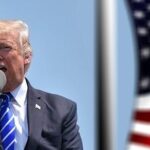
Donald Trump’s recent post on his social media account praising Vladimir Putin – paired with a flattering photograph – has reignited scrutiny of the former president’s posture toward Russia. The message prompted rapid reaction across Capitol Hill, the national security community and newsrooms, raising questions about political messaging, legal exposure and the potential effects on allied cohesion.
Immediate Political Fallout: Bipartisan Concern, Divergent Responses
Lawmakers from both parties reacted quickly. Many Democrats condemned the tone as inappropriate given ongoing tensions with Moscow, while a number of Republican figures urged caution but stopped short of outright repudiation. Rather than a single-line consensus, the response has fractured into three broad currents:
- Requests from congressional leaders for briefings and explanations about any contacts or coordination connected to the post.
- Public criticism from advocacy groups and foreign-policy experts warning that conciliatory language toward an adversary can undercut diplomatic leverage.
- Support from a subset of Trump allies who framed the message as straightforward or strategically pragmatic.
Observers compared the episode to past moments when presidential rhetoric shifted the conversation about alliances and deterrence – for example, debates in 2016-2018 over the implications of presidential statements for intelligence assessments and diplomatic posture.
National Security Community Raises Practical Concerns
Current and former intelligence and defense officials cautioned that public statements by influential figures can have operational consequences. Their concerns focused on several practical risks:
- Potential erosion of unified messaging among U.S. allies when a high-profile American voice signals affinity for an adversary.
- Signals that adversaries could interpret as weakening sanctions or policy resolve.
- Heightened difficulty for diplomats and military officials to coordinate posture when political messaging appears inconsistent with official policy.
Analysts pointed out that in the run-up to elections, credible deterrence and allied coordination are particularly sensitive to public signals; even nonbinding posts can be amplified by state-controlled media abroad.
Legal and Ethics Questions Prompt Calls for Oversight
Ethics watchdogs, election-law experts and several state and federal officials flagged possible legal issues connected to the post, including concerns about undisclosed foreign contacts and potential violations of campaign-finance rules if coordination or value flowed from a foreign source.
Key actions requested by oversight bodies and legal counselors included:
- Preservation orders demanding that social platforms retain all records, metadata and communications tied to the post.
- Expedited reviews by House and Senate ethics committees to determine whether disclosure or reporting requirements were met.
- Clarification from agencies such as the Federal Election Commission and Office of Government Ethics on how post-office statements and interactions with foreign leaders should be reported.
Legal advisers recommended immediate internal audits by campaign compliance teams and advised platforms to create a clear chain of custody for any materials that could figure in regulatory or criminal investigations.
Suggested Reforms: Transparency, Platform Safeguards and Faster Enforcement
Across policy and compliance circles a set of common remedies emerged to reduce the risk of foreign influence and restore public confidence in political communications:
- Independent review: A nonpartisan inquiry into whether laws or ethical rules were breached, with a mandate for rapid fact-finding and public reporting.
- Stronger disclosure rules: Shorter windows for reporting contacts, funding and intermediary involvement related to posts that reference foreign actors.
- Platform accountability: Emergency audits of algorithms that amplify political content, clearer labeling for posts that involve foreign-state actors and routine transparency reports of political interactions on major platforms.
- Expedited enforcement: Temporary guidance from regulatory agencies and targeted penalties for repeated failures to disclose relevant foreign contacts or contributions.
For example, some compliance experts suggested a 48-hour disclosure requirement for campaign-affiliated accounts after any foreign-facing communication – a move intended to emulate rapid financial reporting standards used in other regulatory domains.
How Newsrooms and Platforms Are Adjusting
News organizations covering the controversy have shifted editorial practices to counter rapid misinformation and to improve clarity for readers. Reporters and editors said they will increase use of:
- “What we know / what we don’t” summaries at the top of breaking stories to make the limits of verified information explicit.
- Cross-platform verification tools that embed primary-source documents, timestamps and third-party assessments in articles.
- Visible banners or flags for posts under investigation that explain why a story is still being verified.
Social platforms are under renewed pressure to accelerate provenance tracking and to make ad-disclosure and sponsorship information more prominent. Policy teams are weighing technical measures such as provenance tags for political content and a fast-lane for takedown or labeling requests tied to foreign influence concerns.
Comparative Examples and Context
To put the episode in context, commentators compared it to prior moments when political leaders’ informal communications had outsized consequences. One analogy described it as similar to a corporate CEO sending a public compliment to a rival firm during a trade dispute – a move that can confuse partners and embolden competitors.
Historically, high-profile statements have sometimes preceded tangible policy shifts or changes in diplomatic engagement. The 2016-2019 scrutiny of foreign interference in U.S. elections and subsequent regulatory proposals remains a reference point for what agencies and courts may prioritize now.
Snapshot: Stakeholder Reactions
| Stakeholder | Typical Response |
|---|---|
| Democratic lawmakers | Strong criticism; calls for briefings and investigations |
| Republican lawmakers | Mixed: some defend, others urge clarification |
| Security community | Concern about alliance messaging and potential operational effects |
| Media organizations | Heightened verification and transparency measures |
Short-Term Outlook and What to Watch
The situation is likely to unfold along several tracks: congressional requests for briefings, potential agency guidance or enforcement actions, and platform-level preservation and review of the material. Voter perception will be shaped both by how quickly facts emerge and by how coherently the former president’s team and Republican allies explain the communication.
Expect journalists and investigators to monitor:
- Whether any new disclosures reveal previously unreported contacts or support from foreign entities;
- Agency guidance from the FEC, FTC and Office of Government Ethics clarifying disclosure obligations for former officials;
- Legislative proposals at state and federal levels aimed at tightening real-time transparency for political communications.