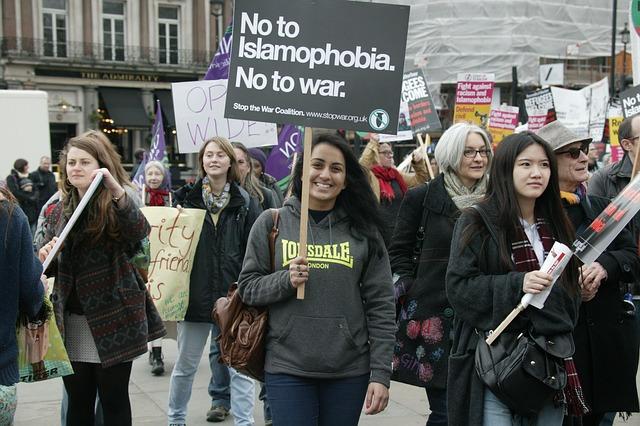
Abdul El-Sayed – the physician, former Detroit health director and high-profile 2018 Michigan gubernatorial contender – is emblematic of a growing cohort of Muslim public servants who have won elected office across the United States even as anti-Muslim sentiment has hardened in parts of the country. Their emergence on school boards, city councils, statehouses and in Congress is testing long-held assumptions about who can wield political power in communities still grappling with fear, misinformation and targeted attacks.
The victories of El-Sayed and dozens of other Muslim elected representatives are reshaping local and national politics: they are not only delivering policy wins on public health, education and civil rights but also confronting Islamophobia directly, turning harassment and skepticism into a focal point for civic engagement and coalition-building.
Abdul El-Sayed and Dozens of Muslim Officials Break Barriers Amid Rising Islamophobia
Facing a surge in anti-Muslim rhetoric, community leaders and candidates have leaned into visibility and policy competence to neutralize prejudice at the ballot box. Abdul El-Sayed – a public-health researcher and progressive political figure whose 2018 gubernatorial campaign amplified issues of healthcare equity and environmental justice – has become a focal point in a broader narrative: Muslim civic engagement is shifting from isolated candidacies to sustained political infrastructure. Reporters and analysts note that El-Sayed’s emphasis on data-driven solutions and coalition-building has helped reframe conversations away from identity-based attacks and toward governance, forcing opponents to confront policy over stereotype in more races across the country.
The consequences are tangible: dozens of Muslim officeholders now serve at local, state and federal levels, bringing new perspectives to policymaking amid persistent hostility. Key areas of impact include:
- Stronger representation in urban mayoralties and city councils;
- Increased presence in state legislatures pushing for civil-rights protections;
- Visibility in federal office that shifts national debate and accountability.
| Office | Representative | State |
|---|---|---|
| U.S. House | Ilhan Omar | Minnesota |
| U.S. House | Rashida Tlaib | Michigan |
| U.S. House | Andre Carson | Indiana |
Despite ongoing threats and targeted misinformation campaigns, these elected officials and their supporters are translating symbolic breakthroughs into legislative initiatives and local programs – a pragmatic push that observers say will determine whether representation turns into lasting institutional change.
From Policy Wins to Grassroots Organizing: How Muslim Elected Leaders Build Power and Deliver Results
In city halls and state capitols, Muslim elected officials such as Abdul El‑Sayed are translating political representation into measurable policy gains that cut across partisan lines. Reporting shows these leaders have secured affordable housing investments, expanded public‑health programs and pushed through anti‑surveillance and civil‑liberties protections in jurisdictions where Islamophobia and xenophobic rhetoric once made such wins unlikely. Their strategies combine legislative craftsmanship with public accountability: drafting clear ordinance language, leveraging committee hearings to spotlight abuses, and using constituent services to convert individual cases into systemic remedies.
Behind those measures is a deliberate, grassroots playbook that builds durable power from the ground up. Campaigns and offices deploy coordinated neighborhood outreach, multilingual communications and targeted legal clinics to protect vulnerable residents while cultivating new civic leaders. Core tactics include:
- Door‑to‑door canvassing focused on immigrant and faith communities
- Volunteer training for rapid response to hate incidents
- Community policy labs that translate local needs into draft ordinances
- Coalition‑building with labor, climate and civil‑rights groups
These combined approaches have enabled measurable increases in voter engagement, faster policy implementation and a growing bench of Muslim officials who can withstand political attacks while delivering results.
What Political Parties Newsrooms and Voters Must Do Next to Protect Muslim Candidates and Reduce Anti Muslim Bias
Parties must move from rhetoric to rapid, institutional change: establish 24/7 rapid-response teams, emergency legal funds for candidates facing hate campaigns, and formal anti-bias training for campaign staff and volunteers. Political organizations should adopt transparent candidate-protection protocols that include security assessments, digital-safety support, and clear disciplinary measures for members who engage in anti-Muslim rhetoric. Immediate steps include:
- Rapid response units to counter disinformation
- Legal & security funds for targeted candidates
- Mandatory bias training for staff and volunteers
These measures are practical and measurable-essential in elections where the threat of intimidation and smear campaigns is a predictable tactic rather than an exceptional event.
Newsrooms and voters also bear responsibility: editors must enforce sourcing standards that prevent stereotype-driven framing, assign beat reporters to cover faith and civil-rights contexts, and publish corrections promptly when coverage fuels bias. Voters should prioritize scrutiny of rhetoric, support independent fact-checking, and attend candidate events to reject fear-based narratives. A simple accountability grid clarifies roles:
| Actor | Action | Expected Impact |
|---|---|---|
| Newsrooms | Bias audits & corrections | Fairer public discourse |
| Voters | Fact-check & local engagement | Reduced spread of smears |
| Parties | Protection protocols | Stronger candidate retention |
Bold institutional commitments paired with vigilant civic behavior are the most reliable defenses against the entrenched anti-Muslim bias that candidates like Abdul El-Sayed continue to confront.
Insights and Conclusions
Their victories are more than symbolic. By winning office at local, state and national levels, Abdul El-Sayed and the dozens of Muslim elected officials now serving are reshaping policy debates, challenging stereotypes and forcing institutions to reckon with a more diverse electorate. Still, their ascent does not erase persistent anti-Muslim sentiment or structural barriers that continue to affect candidates and constituents alike. How these officials navigate those headwinds – and whether their presence prompts lasting change in both lawmaking and public attitudes – will be a key measure of American politics in the years ahead.