

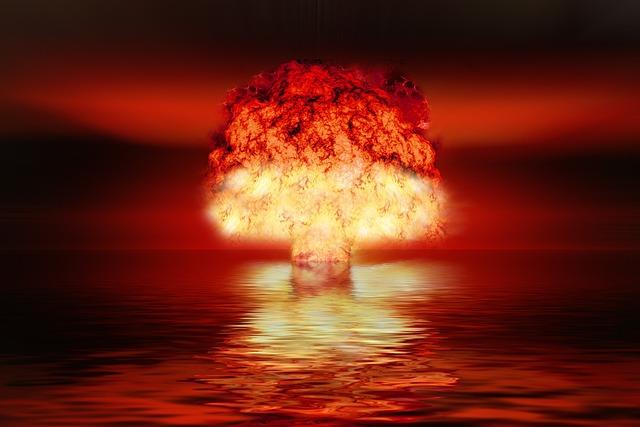
North Korean leader Kim Jong Un has ordered an acceleration of his country’s nuclear weapons program, a provocative move that follows his refusal to accept a proposed meeting with former U.S. President Donald Trump. The announcement – part of a broader push by Pyongyang to bolster its strategic capabilities – heightens tensions on the Korean Peninsula and threatens to further derail already stalled diplomacy over denuclearization. International leaders and analysts are watching closely for how Washington and its allies will respond to the escalation.
Kim Jong Un Orders Rapid Expansion of Nuclear Arsenal After Snubbing Trump Offer to Meet
According to state media, North Korea’s leader has ordered a significant acceleration of weapons development, instructing military and scientific agencies to prioritize nuclear and delivery-system programs. The announcement framed the move as a response to what Pyongyang described as persistent external threats and a need to solidify national deterrence; officials said resources would be redirected to speed production timelines and expand testing capacity. International analysts say the directive appears aimed at quickly increasing both warhead stockpiles and the missile systems needed to deploy them.
The decision immediately raised alarms across the region and prompted a flurry of diplomatic and defense-oriented responses. Observers warn the following near-term impacts could materialize:
- Heightened military readiness – joint U.S.-ROK exercises and aerial patrols likely to increase.
- Diplomatic pushback – emergency consultations at the U.N. and intensified sanctions discussions.
- Accelerated testing – greater probability of missile and weapons tests in months ahead.
- Economic ripple effects – potential for new punitive measures that could further isolate the regime.
Global capitals called for calm even as they pledged coordinated pressure; the development marks a fresh escalation in a long-running security standoff with unpredictable consequences.
Analysts Warn of Immediate Regional Security Risks and Call for Tightened Multilateral Sanctions and Targeted Military Readiness
Regional analysts say the recent public shift by North Korea toward expanding its nuclear arsenal has sharply raised the probability of short-term instability across Northeast Asia. They urge an immediate, coordinated response that combines economic pressure with calibrated defense measures to deter escalation without provoking unintended clashes. Recommended actions include:
- Tightened multilateral sanctions – closing loopholes and improving enforcement across supply chains;
- Joint intelligence sharing – real-time maritime and missile tracking among allies;
- Targeted deployment – temporary, reversible force postures to increase deterrence while avoiding permanent escalation.
| Actor | Recommended Response | Window |
|---|---|---|
| US & Allies | Enhanced patrols, sanctions coordination | Immediate (days-weeks) |
| UN | Sanctions review, enforcement tasking | Short-term (weeks) |
| Regional partners | Intelligence and logistics sharing | Ongoing |
Experts warn that without rapid, unified measures the situation could spiral through miscalculation, accelerated testing, or illicit procurement networks. They stress an urgent balance: strengthen multilateral economic pressure and readiness while using diplomatic channels to reduce the risk of conflict. Immediate risks cited include:
- accelerated weapons development and export;
- provocative missile tests near commercial routes;
- escalatory missteps during military exercises;
- increased cyber and clandestine operations to circumvent sanctions.
Analysts conclude that a combination of tighter sanctions enforcement, transparent rules of engagement for forward forces, and intensified diplomatic coordination is the most likely path to contain near-term threats without triggering wider hostilities.
Diplomats Urge Renewed Negotiations with Robust Verification Mechanisms and Phased Incentives to Curb Proliferation
Senior envoys from multiple capitals reacted sharply to Pyongyang’s latest pledge to expand its arsenal, urging a return to talks framed by robust verification and clear, reciprocal steps. Diplomats stressed that any successful re-engagement must link concrete confidence-building measures to tangible, time-bound incentives – a sequence designed to make rollback verifiable and reversible. Proposed elements gaining traction in closed-door meetings include a staged freeze of testing activities, restoration of independent monitoring, and pre-agreed reporting requirements to reduce ambiguity and miscalculation:
- Immediate: Moratorium on long-range tests and satellite launches
- Near-term: Re-admission of international inspectors and continuous monitoring
- Conditional: Phased sanctions relief tied to verified dismantlement steps
Negotiators are pushing for a verification architecture combining on-site inspections, remote sensing, and a clear chain-of-custody for nuclear materials, backed by a snapback enforcement clause at the U.N. Security Council level. The following simple framework illustrates the preferred sequencing diplomats are promoting as the basis for renewed talks:
| Phase | Verification | Incentives |
|---|---|---|
| 1 – Freeze | On-site inspections; satellite watch | Targeted humanitarian aid |
| 2 – Rollback | Material accountancy; international labs | Limited sanctions relief |
| 3 – Normalization | Continuous monitoring; verification reports | Economic and diplomatic normalization |
Diplomats warned that failure to pair incentives with rigorous verification would only embolden further proliferation, while a credible, phased deal could provide the only realistic pathway to stabilizing the peninsula and reducing the risk of miscalculation.
The Conclusion
The statement marks a stark escalation in rhetoric from Pyongyang and deepens uncertainty over the future of denuclearization talks on the Korean Peninsula. Analysts say an explicit push to expand the North’s arsenal could complicate diplomatic options, heighten regional tensions and prompt renewed calls for tighter sanctions and enhanced missile defenses among U.S. and allied governments.
How states respond in the coming days – from Washington and Seoul to Beijing and the U.N. Security Council – will shape whether the episode becomes a short-lived provocation or the start of a more sustained arms buildup. For now, governments and monitors will be watching North Korea’s weapons programs closely for signs of new tests or deployments, even as diplomatic channels remain a critical, if fraught, avenue for de-escalation.
The immediate question is whether Pyongyang will translate rhetoric into action. Whatever the next steps, the announcement has underscored the persistent challenge of curbing proliferation while preserving room for diplomacy on one of the world’s most volatile security flashpoints.