Muted Spectacle: Moscow’s Slimmed-Down Victory Day Parade and What It Signaled About the Kremlin’s Position in the Ukraine War
Opening summary
This year’s Victory Day parade in Moscow was noticeably restrained. Where years past showcased grand military hardware, sweeping flypasts and massed veteran columns, the event was pared back: fewer formations in Red Square, minimal heavy equipment and a deliberately muted program. For Vladimir Putin and the Kremlin, what is typically a stage-managed demonstration of national strength became instead an exercise in controlled remembrance – a performance that, to many observers, revealed political caution and operational pressures stemming from the war in Ukraine.
Visible changes on Red Square
– Reduced hardware: conspicuous absence of large armored columns and limited displays of modern weapon systems.
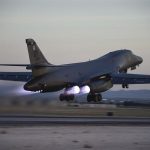
– No major aerial flypast: the sky above central Moscow remained largely clear compared with earlier parades that featured multiple squadrons.
– Smaller human presence: veteran contingents and invited foreign delegations were noticeably smaller and more selectively chosen.
– Tight media management: carefully framed camera shots, shortened sequences and edited broadcasts limited opportunities for unscripted images.
Taken together, these adjustments conveyed a shift in emphasis – from triumphant spectacle to solemn, tightly scripted ritual – and invited scrutiny about the reasons behind that recalibration.
Reading the message: political optics and strategic signaling
National parades serve two functions: they reassure domestic audiences of state competence and project power abroad. This compressed Victory Day performance did both in a different register. Domestically, Kremlin spokespeople presented the ceremony as a solemn act of remembrance – a narrative that allows the leadership to emphasize sacrifice and cohesion rather than celebrate outright triumph. Internationally, a scaled-back show offers less overt intimidation but signals constraint: when the usual instruments of display are absent, analysts infer limits in logistics, equipment availability or manpower.
Military implications inferred from the choreography
Military analysts and journalists pointed to several plausible operational factors behind the toned-down parade:
– Replenishment challenges: sustained combat operations increase demand for spare parts, ammunition and replacement vehicles, making public displays of fresh hardware less feasible.
– Personnel attrition and redeployment: fewer massed formations can reflect shortages of trained troops or the need to keep units committed to front-line rotations.
– Logistical prioritization: equipment and aircraft may be retained for operational use rather than ceremonial exhibition.
While official explanations framed the event as a careful commemoration, the pattern matched other indicators widely reported since 2022 – sustained combat attrition, supply-chain pressures and the need to balance domestic morale with battlefield realities.
Policy implications for Kyiv’s backers
For capitals supporting Ukraine, a muted parade is both an informational cue and a policy window. It underlines the potential leverage that coordinated external measures can exert if applied decisively. Practical priorities include:
– Targeted economic measures: focused sanctions or interdictions aimed at procurement networks, dual-use supply chains and revenue streams that finance military operations.
– Rapid defensive deliveries: expedited shipments of air-defence systems, ammunition stocks and precision munitions where they can blunt enemy advantages quickly.
– Enhanced operational support: intensified intelligence-sharing, secure communications links and joint targeting cells to improve strike effectiveness and reduce waste.
– Supply-chain disruption: tracing and interdicting covert re-exports and third-country transits that allow materiel to reach state actors.
Short-term effects of these measures can include constrained replenishment capacity, degraded procurement timelines and tactical advantages for Ukrainian forces if weapons and munitions reach frontline units faster.
Concrete logistical measures for Kyiv and partners
Beyond pledges, effective support requires operational fixes that speed materiel from factory to frontline:
– Pre-positioned stocks in neighbouring allied countries to shorten delivery timelines.
– Simplified export licensing and cross-border procedures for critical spares and munitions.
– Secure transport corridors – maritime and overland – with dedicated escorts where necessary.
– Robust customs and export-control coordination to prevent leakage and covert transfer.
Think of it like a relay race: every handoff must be tightened, the baton (equipment) must be visible and tracked, and any weak link in the chain slows the whole effort. Strengthening those links accelerates battlefield impact.
Strategic communications and counter-messaging
The parade’s restrained tone also underscored the importance of information operations. To prevent the Kremlin from converting austerity into an alternate propaganda line (sacrifice, endurance), allies and independent media should:
– Maintain rapid-response debunking units that can counter false narratives within hours.
– Publicize verifiable reporting on diversion networks and sanction enforcement to increase reputational costs.
– Support independent Russian-language outlets and platforms that provide alternative perspectives to domestic audiences.
What to watch next
If the slimmed-down Victory Day represents more than a one-off scheduling choice, subsequent signals to monitor include:
– Future public ceremonies and their scale (regional parades, commemorations).
– Changes in conscription announcements, official casualty reporting or personnel rotations.
– Procurement and defense-budget amendments announced in forthcoming budgets or state Duma sessions.
– Patterns in opaque media footage – increased censorship, edited broadcasts or greater security restrictions around public events.
Each of these items, more than any single parade, will reveal whether the Kremlin is entering a longer phase of constrained signaling or merely adjusting optics for a particular moment.
Conclusion
This year’s Moscow Victory Day parade was notable less for what it celebrated than for what it withheld. By replacing lavish pageantry with a subdued, tightly controlled ceremony, the Kremlin signalled a pivot in tone – emphasizing sacrifice and stability over spectacle. For analysts, policymakers and the public, the essential task is to read the parade in context: not as an endpoint, but as a symptom of broader military and political dynamics tied to the war in Ukraine. How Moscow balances operational needs, domestic expectations and international pressure in the months ahead will determine whether muted displays become the norm – or whether future parades will revert to the grandiose demonstrations of power that once defined Victory Day.