When Valor Becomes a Liability: Rethinking the Warrior Ethos for Today’s Armed Forces
Intro: The promise and peril of a fighting culture
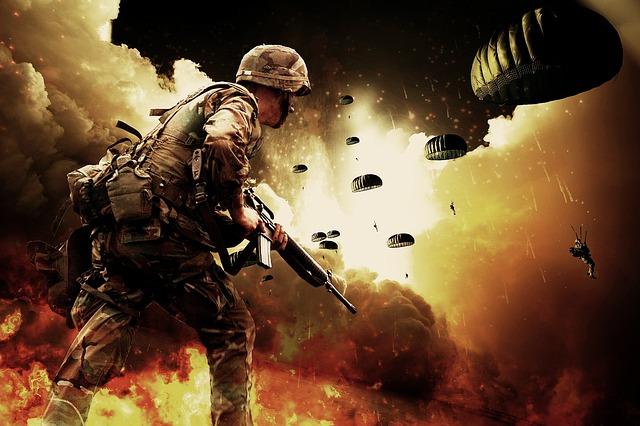
The “warrior ethos” – a cultural code that prizes audacity, personal bravery and an uncompromising stance – has been a powerful motivator for soldiers, politicians and publics alike. Framed as the clearest path to victory, it offers a simple, emotionally compelling narrative: bold action wins. Yet historians and defense analysts increasingly warn that this creed can produce predictable strategic failures. Campaigns driven by a glamourization of offensive action frequently end in overstretch, political fallout and, in some cases, long-term decline.
This article surveys historical and recent examples, outlines how a valor-centered culture warps military judgment, and sets out practical reforms militaries are testing to align battlefield ethos with the realities of prolonged conflict.
How a valor culture skews strategy
When organizations reward visible daring above all else, several institutional distortions follow. These are not mere personality quirks; they become structural drivers of poor outcomes.
Common organizational symptoms
– Selective use of intelligence: inconvenient analyses are minimized or dismissed to preserve the narrative of imminent success.
– Accelerated timelines: leaders tighten schedules to secure quick, high-profile wins even when conditions favour patience.
– Promotion and reward biases: officers who promise dramatic advances or visible “victories” rise faster than those who emphasize sustainment and governance.
– Optics over endurance: decisions prioritize media-friendly success rather than durable operational effects.
Consequences for campaigns
– Misreading adversaries’ capacity to adapt and endure.
– Neglected logistics and civil administration that leave tactical gains unsustainable.
– Greater susceptibility to groupthink and reduced institutional resilience.
Real-world costs: a few headline figures
The gap between battlefield headlines and strategic outcomes has tangible costs. For example, two decades of U.S. military engagement in Afghanistan contributed to an expenditure on the order of $2-2.5 trillion and ended with rapid political collapse in 2021, showing how kinetic advantage can fail to secure lasting political objectives. Recent conflicts have similarly demonstrated how overreliance on force, without matched investment in governance and logistics, produces fragile results.
Lessons from history and recent wars
Short-term brilliance can mask long-term vulnerability. Several campaigns across eras illustrate this pattern.
Napoleon and the limits of repeated conquest
Napoleon’s early campaigns, including the dazzling victory at Austerlitz, created a reputation for battlefield genius. That reputation encouraged successive gambits that underestimated seasonal constraints, supply challenges and the political costs of prolonged occupation – culminating in the catastrophic 1812 Russian campaign. Tactical superiority did not immunize strategy from the realities of distance, logistics and national resilience.
Imperial force and protracted insurgency
The Soviet campaign in Afghanistan and the U.S.-led occupation of Iraq after 2003 show another recurring pattern. Initial military dominance did not translate into stable governance. Insurgent adaptation, social fragmentation and failure to build legitimate local institutions turned kinetic advantage into drawn-out conflict and eventual strategic setback.
Modern illustration: miscalculations in 2022-23
Russia’s large-scale invasion of Ukraine exposed familiar flaws: assumptions about rapid collapse of political will, supply-chain fragility, and underestimation of national resilience and popular mobilization. The campaign forced rapid operational recalibrations and highlighted how poor planning for sustainment and political consequences undermines initial gains.
Why tactical courage isn’t enough
Courage remains a vital military attribute, but valor unmoored from institutional depth invites catastrophe. Tactical initiative must be paired with logistics, civil-military capacity, legal clarity and a political strategy that can absorb the costs of protracted competition.
Concrete reforms that restore strategic balance
A number of defense establishments are piloting changes to blunt the worst effects of a warrior-centric culture. These reforms emphasize preparation, institutionalized critique and incentives that reward durable results rather than headline victories.
Training and exercise design
– Integrated live‑virtual‑constructive (LVC) exercises that replicate sustainment pressures, civil affairs interactions and electronic warfare alongside conventional combat.
– Distributed training environments where small-unit leaders are repeatedly exposed to ambiguous orders and complex problem sets, building judgement under uncertainty.
– Scenario-driven stressors that deliberately punish “heroic” but unsustainable tactics to reward sound trade-offs.
Institutionalizing dissent and realistic testing
– Permanent red teams empowered to contradict plans and present alternative worst-case assumptions.
– Formal “pre-mortem” requirements for major operations to surface blind spots before they become crises.
Personnel and promotion reform
– Competency portfolios that weigh wargame and simulation performance, civil-military project experience, and peer-reviewed after-action work alongside traditional command tours.
– Promotion incentives that reward demonstrated ability to manage logistics, governance and interagency coordination – not only battlefield audacity.
Planning, budgeting and accountability
– Mandatory contingency funding lines and explicit civil-affairs triggers tied to phases of operations.
– Clear escalation-control protocols and legal oversight baked into operational design.
– Transparent after-action reviews linked to doctrine updates, retraining resources and public reporting to build institutional learning.
Broader investments to match battlefield bravery
– Strengthening logistics and sustainment capacity, from prepositioned stocks to expeditionary maintenance.
– Investing in indigenous governance and partner-capacity programs so military gains can transition into stable political outcomes.
– Measuring success with multidimensional indicators – governance, security, economic stability – rather than body counts or territory held.
Analogy: sprinting a marathon
Think of the warrior ethos as rewarding sprinting in a race that is actually a marathon. A sprinter’s bursts can win short segments, but a marathon requires pacing, nutrition, infrastructure and long-term strategy. Militaries need the same balance: episodic courage embedded in systems designed to last.
A pragmatic, not censorious, conclusion
The message is not to diminish bravery; war will always demand courageous action. The imperative is to place that courage within institutions structured to sustain campaigns and produce political outcomes. When morale, doctrine and promotion systems tilt too far toward spectacle and rapid conquest, democracies risk paying for it on both battlefields and ballots. If policymakers and military leaders incorporate the lessons of history – and modern examples – they can build armed forces that combine fighting spirit with the logistical, political and ethical foundations required for lasting success. If they fail to adapt, the warrior myth risks producing not glory but strategic decline.