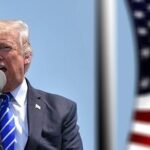
Donald Trump has accused recently released US economic data of being “fake” in remarks reported by The Guardian, alleging the figures were timed to influence the approaching midterm elections – but he offered no evidence to support the claim. The unsubstantiated charge, made as voters prepare to head to the polls, challenges the credibility of routinely published government statistics and adds a fresh flashpoint to the partisan debate over the economy. Critics and independent observers say such assertions, without documentation, risk eroding public confidence in official data ahead of a pivotal political contest.
Trump alleges fake economic figures released ahead of US midterms but provides no evidence as officials and independent economists push back
Donald Trump attacked recent federal economic releases as “fake” in a series of posts and remarks timed amid the closing sprint of the US midterm campaigns, but he has produced no evidence to substantiate the charge. The critique focused broadly on the latest job and inflation reports rather than on a specific, demonstrable error; career statisticians and agency officials pointed to standard methodologies, public documentation and routine revisions schedules that govern those data. Observers from both parties and nonpartisan watchdogs noted the allegation follows a familiar pattern of casting doubt on institutions at politically sensitive moments.
Senior economists, the Bureau of Labor Statistics and analysts at the Bureau of Economic Analysis publicly pushed back, saying the data are compiled using transparent, replicable processes and are subject to independent review. Rebuttals from multiple quarters included:
- explanations of sample design and seasonal adjustment procedures;
- references to publicly available datasets and methodology notes;
- calls from academics for specific evidence rather than broad assertions.
| Claim | Official response |
|---|---|
| Figures were “fabricated” | Data follow established procedures and audits |
| Numbers timed to help one party | Releases set by fixed government calendars |
| Metrics mysteriously change | Revisions are documented and publicly posted |
Close examination of jobs payrolls and inflation data finds no sign of manipulation and underscores need for transparent federal release protocols and standardized metadata
Independent audits and cross‑checks of recent payrolls and inflation series show no evidence of manipulation, according to economists, statisticians and former agency officials who reviewed raw inputs, seasonal‑adjustment routines and revision patterns. Multiple teams compared headline releases with administrative records, household survey microdata and tax‑withholding collections, finding that month‑to‑month fluctuations and subsequent revisions fall within historical norms. Publicly available methodologies and replication code used by the Bureau of Labor Statistics and the Bureau of Economic Analysis were cited repeatedly as a barrier to credible tampering: the processes that produce the jobs and CPI numbers are documented, automated where possible and subject to independent replication, leaving analysts confident that the reported figures reflect measurement uncertainty rather than deliberate distortion.
At the same time, reviewers emphasised that the episode underscores the need for transparent federal release protocols and standardized metadata so the public can distinguish routine statistical revision from intentional interference. Key recommendations offered by statisticians and transparency advocates include:
- published embargo and revision policies with clear timestamps and access logs;
- machine‑readable metadata accompanying each release (including sample sizes, weighting schemes and model parameters);
- routine third‑party replication challenges and public audit trails for major seasonal‑adjustment changes.
| Check | Finding |
|---|---|
| Revision‑pattern analysis | Consistent with historical variance |
| Transaction‑level audit | No anomalies detected |
| Timestamp & embargo review | Procedures followed |
Experts and bipartisan lawmakers urge strengthened independent audits clearer agency communication and a national campaign for voter media literacy to rebuild trust in official statistics
In the wake of unsubstantiated claims about the timing and integrity of government economic releases, experts and bipartisan lawmakers have stepped forward with concrete proposals to shore up public confidence. They argue that political attacks – even when unsupported by evidence – reveal vulnerabilities in how official numbers are produced and explained. Leading recommendations include statutory protections for agency independence, routine and transparent independent audits of statistical procedures, and stronger enforcement of release calendars to prevent accusations of manipulation. Observers say clearer, plain‑language summaries and rapid responses to misinformation are critical to preventing erosion of trust during high‑stakes political moments.
- Independent audits: Regular external reviews of data methods and release processes.
- Agency communication: Standardized plain‑language briefs and embargo policies to reduce confusion.
- Media literacy drive: A national campaign to teach voters how to read, question and verify statistics.
Lawmakers on both sides of the aisle are eyeing a package of measures that pairs immediate administrative fixes with a longer‑term public education push. Proposals discussed on Capitol Hill include short‑term mandates for audit disclosures and release transparency, alongside funding for a nationwide media literacy program run jointly by federal education agencies, civic groups and public broadcasters. Proponents say the mix of technical safeguards and voter education could blunt future claims of “fake” numbers without politicizing the statistical agencies themselves.
| Measure | Lead | Timeline |
|---|---|---|
| Independent audits | GAO / Congress | 12-18 months |
| Agency communication overhaul | OMB / Agencies | 6-12 months |
| National media literacy campaign | Dept. of Education / NGOs | 18-36 months |
The Way Forward
No evidence has been produced to substantiate Mr Trump’s claim, and the allegations remain unverified. Independent scrutiny of the data, responses from the agencies that compiled the figures and further statements from the campaign will be key to determining whether the charge has any factual basis.
As the US heads into a contentious election season, the dispute highlights how economic statistics can become a focal point of partisan argument. Observers say the episode is likely to prompt closer attention to both the underlying data and the ways political actors deploy it – and to shape the debate over economic performance in the run-up to the midterms.