

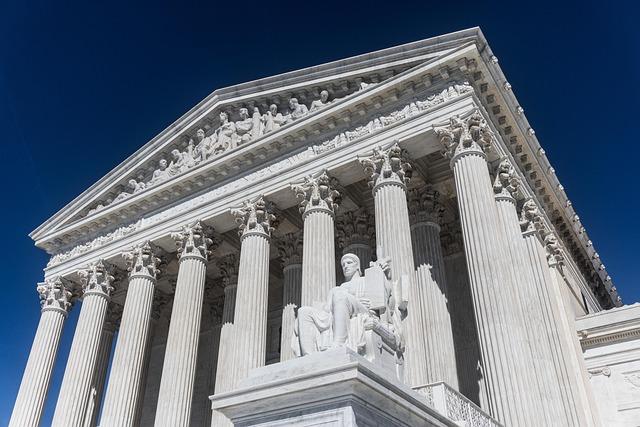
In the wake of a midterm rout that pared back Republican strength at the ballot box, the party nonetheless finds itself with a path to confirm a Supreme Court justice – a possibility that puts strategy and principle on a collision course. With vacancies, timing and Senate procedure still in play, Republican leaders could marshal the votes or change the rules necessary to install a conservative jurist, even as their political standing has been weakened by recent losses.
The choice confronting Republican lawmakers goes beyond a single nomination. Pushing ahead could lock in a judicial legacy for decades and satisfy the party’s activist base, but it also threatens to deepen public resentment, erode Senate norms and fuel a narrative of raw power politics at a moment of diminished electoral credibility. This article examines the tactical options available to Republicans, the institutional and democratic costs of each, and the broader consequences for the Supreme Court’s legitimacy.
After midterm rout, Republicans retain votes to confirm a Supreme Court justice but face razor thin margin and growing internal dissent
Republican leaders say they still have the arithmetic to push a Supreme Court nomination across the finish line, but party strategists warn the margin is perilously thin and growing internal dissent is already reshaping negotiations. A string of vulnerable incumbents and newly empowered moderates means floor managers must secure every likely yes, and several GOP senators have publicly signaled they will demand concessions on policy or committee influence before lending support. Party aides describe frantic behind-the-scenes outreach, while a senior GOP senator told reporters that “a single defection could change everything” – a reminder that, in a Senate measured in single votes, confirmation is no longer a foregone conclusion.
- Leverage points: committee assignments, judicial blue slips, legislative offsets
- Risks: primary challenges, voter backlash, loss of credibility on judicial independence
Republican chiefs are weighing the short-term gain of a confirmed justice against a cascade of long-term costs: legislative concessions to hold the caucus together, the erosion of party discipline, and a narrative of transactional governance that opponents will exploit on the 2026 ballot. A quick snapshot of possible vote scenarios illustrates how narrow the path is – even a single high-profile defection would force additional bargaining and could tie confirmation outcomes to unrelated policy deals.
| Hypothetical scenario | Votes (GOP) | Primary consequence |
|---|---|---|
| Unity maintained | 51-53 | Low |
| One defection | 50-52 | High |
| Multiple dissidents | 49 or fewer | Severe-require cross-party votes |
The choice facing Republican leaders is stark: secure a high-stakes victory now at the cost of internal fractures and political capital, or pull back and risk a lost opportunity that would redefine the party’s judicial legacy.
Confirmation path will hinge on courting swing senators securing procedural votes and managing sustained Democratic opposition and public backlash
With the Senate razor-thin, Republicans face a delicate arithmetic: persuade a handful of swing senators to cross a political Rubicon while staving off coordinated Democratic resistance on the floor and in the streets. Negotiations will likely center on narrow procedural guarantees – timing of the floor vote, limits on post‑confirmation rulemaking, and side agreements on federal priorities – that can be packaged to reassure holdouts without alienating the right flank. At the same time, leaders must brace for a sustained assault from Democrats that will include continuous floor debate, targeted messaging operations, and mobilized protests designed to convert judicial confirmation into a campaign issue. The calculus is not only legal but electoral: each concession to win votes increases the political price at home and fuels narratives about court legitimacy that could reverberate in future elections.
Inside the chamber the path is surgical: secure committee approval, clear the required procedural hurdles, and lock in a cloture vote to prevent delay. That blueprint will rely on a tight whip operation, tactical concessions and, if necessary, creative parliamentary maneuvers. Republicans can expect Democrats to use every available tool to slow the process and rally public opposition, forcing a tradeoff between speed and optics. Observers say the likely playbook will include:
- Targeted concessions to moderates on process and appointments
- Compressed timelines to limit sustained floor theater
- Aggressive messaging to blunt outside protests
Below is a short table summarizing the core arithmetic and levers at play:
| Item | What it means |
|---|---|
| Vote math | Simple majority (50+1 or 51) |
| Key leverage | Committee scheduling, side promises, timing |
| Opposition tools | Endless debate, media campaigns, protests |
Party leaders should pursue a broadly acceptable nominee hold transparent hearings and time the vote to shore up Senate cohesion and limit long term political fallout
Republican leaders confront a calculation that goes beyond raw arithmetic: confirming a justice is still possible, but preserving the party’s governing capacity requires careful trade-offs. To minimize defections and public blowback, the leadership should prioritize a nominee who can win a broad consensus within the conference, insist on a transparent process that defuses accusations of secrecy, and deliberate over timing so the chamber votes under the most favorable conditions.
- Pragmatic pick: A nominee with a restrained record who eases cross-aisle concerns.
- Open hearings: Full disclosure of documents and live testimony to blunt claims of backroom deals.
- Strategic timing: Move when internal disputes are least likely to erupt and when messaging can be tightly coordinated.
The short-term payoff – another conservative seat on the bench – must be weighed against the longer-term risk of eroding Senate cohesion and alienating swing voters ahead of future cycles. If leaders rush a polarizing nominee or mask disagreements, they risk fueling primary challenges, damaging incumbents in competitive states, and ceding the narrative to opponents who can portray the process as illegitimate. The calculus is straightforward: a measured confirmation that secures the vote now could preserve institutional stability later; a scorched-earth approach might bring an immediate victory at the cost of years of political fallout and weakened legislative effectiveness.
Final Thoughts
Whatever path Republican leaders choose, the decision will be measured not only in votes but in political and institutional fallout. Confirming a justice now – through ordinary majorities, by changing Senate rules or leaning on party unity – would secure a long-term conservative imprint on the high court. But it would also risk inflaming an already polarized electorate, eroding bipartisan norms in the Senate and prompting a Democratic backlash that could reshape the next fights over judicial power and election-year turnout.
In the short term, attention will turn to the White House for a nomination and to the Senate Judiciary Committee for hearings that are sure to be bruising. In the longer term, the episode could accelerate efforts to alter the court itself or to weaponize confirmations as a perpetual campaign issue. For a party reeling from midterm losses, the calculus is stark: gain a lasting institutional advantage at the potential expense of political capital and public trust. The coming weeks will reveal whether Republican leaders judge the prize worth the price.