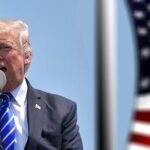
Donald Trump to Attend Supreme Court Hearing on Birthright Citizenship: What It Means for Law, Policy and Politics
Overview: A courtroom moment turned campaign platform
Former President Donald Trump has announced he will be present for Supreme Court oral arguments in a pivotal case testing whether the 14th Amendment’s citizenship guarantee extends to children born in the United States to parents who are not U.S. citizens. His attendance converts a complex constitutional dispute into a highly visible political event, further intertwining immigration issues with the national campaign debate. At stake are questions that could reshape immigration policy, administrative practice, and the lived status of many U.S.-born children.
Political implications: Why the appearance matters
Trump’s decision to show up at the Court elevates the case beyond legal doctrine into the realm of electoral messaging. Campaign operatives on all sides view the hearing as a moment to define narratives about sovereignty, the rule of law, and national identity. Supporters frame attendance as vigorous engagement on a defining policy issue; critics argue it risks eroding the separation between partisan politics and the judiciary’s impartial role. Either way, the presence of a major political figure on the Supreme Court steps blurs the boundary between legal adjudication and political theater.
Legal stakes: How the argument could change citizenship law
At the core is the interpretation of the Citizenship Clause of the 14th Amendment: does “subject to the jurisdiction thereof” confer near-automatic citizenship to virtually every child born on U.S. soil, or can that guarantee be limited by statute or executive action? Legal scholars say the Court’s ruling could fall into one of three broad categories, each with divergent consequences:
– Maintain existing precedent: A decision upholding the prevailing interpretation would preserve the longstanding rule that most U.S.-born children are citizens, reinforcing federal primacy over citizenship and avoiding immediate upheaval in administrative systems.
– Narrow the clause’s reach: If the Court construes the clause more restrictively, millions of people who now rely on birthright citizenship as the basis for their status could face legal uncertainty. States might experiment with restrictive measures, and hospitals, schools and benefit programs would confront new eligibility questions.
– Defer to the executive: A ruling that places broad authority in the hands of the president or executive agencies would make citizenship policy subject to faster, more politicized rulemaking, increasing the potential for rapid regulatory change in response to administration priorities.
Practical consequences: What might change on the ground
Whatever the outcome, immediate ripple effects are likely:
– Administrative confusion: Medical facilities, vital records offices, and social service agencies could receive contradictory guidance about birth certificates and eligibility for benefits, at least until federal or state policies are clarified.
– Litigation cascade: Observers expect a surge of downstream lawsuits challenging birth registrations, benefit denials, and state-level measures designed to limit access to services.
– Policy experimentation: Some states may pass laws aimed at restricting documentation or benefits for certain newborns, prompting conflicts over preemption and federal authority.
– International and humanitarian questions: A narrower domestic interpretation could raise questions about the status of children who become stateless, with implications for treaty obligations and consular practice.
Context and scale: Who could be affected
The United States records roughly 3.6-3.7 million births per year (CDC provisional counts in recent years). While only a subset of newborns have noncitizen parents, legal changes to birthright rules could place hundreds of thousands-or more-into legal limbo depending on how broadly a new interpretation is applied. Comparatively, many countries around the world rely primarily on jus sanguinis (citizenship by parentage) rather than birthright by location, illustrating how different constitutional choices produce very different citizenship regimes.
Campaigns, courts and the media: Preparing for rapid developments
News organizations, legal teams and political campaigns have stepped up real-time monitoring. Key tactics being deployed include tracking live transcripts, noting judges’ lines of inquiry, and watching for emergency motions or stays that would change the case’s immediate trajectory. Campaigns are preparing layered response plans-pre-approved statements, surrogate messaging, and legal contingency strategies-to pivot within minutes of a significant development.
What to watch during oral argument
– Bench questioning: Which constitutional text, history, or precedent justices emphasize will reveal likely analytic paths.
– References to historical practice: Expect heavy use of 19th-century materials and prior case law about the 14th Amendment.
– Procedural signals: Questions about remedy, scope of relief, or remand suggest narrower outcomes that leave factual issues unresolved.
– Emergency filings after the hearing: Rapid appeals or requests for stays could foreshadow an extended legal battle.
Likely timeline and next steps
The Court typically issues major opinions by the end of its term in late spring or early summer. After the opinion is released, litigants and policymakers are likely to respond quickly: filing emergency petitions, pursuing targeted appeals, or introducing legislation to codify one interpretation or another. Where the Court leaves ambiguous areas of doctrine, expect further litigation and rulemaking as federal agencies and state governments test the limits of the new holding.
Broader implications: Politics, policy and the social fabric
A ruling that modifies longstanding birthright practice would not only change statutory and administrative processes; it would also have deep social and political consequences. Citizenship status affects access to education, health care, voting eligibility (directly for adults), and the sense of belonging for families. Policy shifts could thus influence electoral coalitions, civic participation, and long-term demographics.
Conclusion: A watershed moment with cascading effects
The Supreme Court’s forthcoming decision will reverberate beyond the bench. Donald Trump’s pledge to attend underscores how legal disputes over the 14th Amendment and birthright citizenship have become central battlegrounds in contemporary politics. Observers should prepare for a period of rapid legal change, intense political messaging, and uncertain administrative adaptations. The full implications will depend on the opinion’s contours, its remedial instructions, and the responses of legislatures, agencies, and courts across the country.