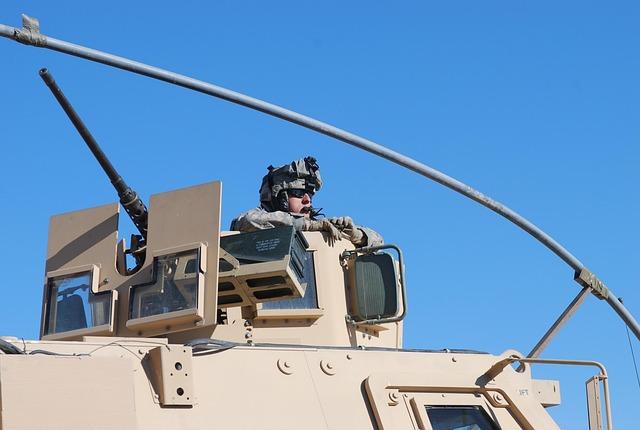
President Donald Trump’s proposal to withdraw roughly 5,000 U.S. troops from Germany marks a sharp departure from decades of American posture in Europe and, experts warn, could do more harm than good for U.S. interests. Military leaders and NATO officials say the pullback would weaken deterrence against Russia, complicate logistics and intelligence networks built around U.S. bases, and strain long-standing alliances that underpin American influence on the continent. Beyond the immediate operational costs, analysts contend the move risks signaling U.S. retrenchment to rivals and allies alike, undermining credibility at a moment of renewed great-power competition. This article examines how the planned reduction could erode readiness, disrupt alliance cohesion and ultimately diminish American security and diplomatic leverage.
Trump’s Call to Pull Troops From Germany Risks Undermining NATO Deterrence and United States Military Readiness in Europe
The proposed withdrawal of roughly 5,000 personnel would do more than shift equipment on a map; it would alter perceptions of American resolve and the practical balance of deterrence in Europe. Allies already negotiating burden-sharing and force posture would face a sudden recalculation, while Moscow and other challengers could interpret the move as a softening of U.S. commitments. In operational terms, the decision risks an immediate erosion of rapid-response capability and complicates integrated defence planning. Short-term impacts include:
- Reduced ability to reinforce the eastern flank quickly
- Disruption of established logistics and intelligence networks
- Political strain with host-nation governments and NATO partners
Operational readiness would also suffer: pre-positioned stocks, consolidated maintenance facilities and routine joint exercises provide the backbone of U.S. power projection in Europe, and moving forces away would increase transit times and costs while degrading training continuity. The table below highlights a simple before-and-after snapshot of the likely effects on posture and response times, underscoring why military planners warn that the savings on basing could be outweighed by higher operational risk and diminished deterrent effect.
| Metric | Current | After 5,000 Reduction |
|---|---|---|
| Forward-deployed troops (approx.) | 34,500 | ~29,500 |
| Estimated reinforcement time to Baltics | 24-48 hrs | 48-72 hrs |
| Joint exercise cadence | Regular | Less frequent |
A Rapid Drawdown Would Fray Intelligence and Logistics Networks and Hamper Rapid Response Across Europe and Beyond
A rapid withdrawal would sever the delicate web of shared intelligence collection and logistics that has been built over decades between U.S. forces and European partners. Key hubs in Germany host signals and geospatial collection nodes, secure relay points and long-standing liaison teams whose routines create the fused picture commanders rely on; removing 5,000 troops at speed would degrade SIGINT and C4ISR reach, interrupt real‑time targeting feeds, and force hurried technical re‑hosting of sensitive systems. The immediate operational fallout would include supply-chain breaks for munitions and spares, disrupted maintenance cycles for air and ground platforms, and the loss of embedded analytic partnerships that accelerate decision‑making during crises.
- Cross‑border training and interoperability exercises curtailed
- Prepositioned equipment access slowed or lost
- Air refuelling and medevac routing complicated
- Allied intelligence sharing hampered by trust and technical gaps
Those tactical frictions would quickly translate into strategic risk: slower crisis response, heavier burdens on U.S. bases farther afield, and a vacuum that adversaries could exploit to probe NATO cohesion. European commands would face longer timelines to mobilize forces, and partners may hesitate to plan operations that depend on U.S. force posture if basing becomes politically unstable. The net effect would be a weaker, slower, and less predictable U.S. military presence in Europe and beyond, with intelligence and logistics networks that cannot be reconstituted overnight.
| Node | Immediate Effect |
|---|---|
| Ramstein | Strained command and relay functions |
| Grafenwöhr | Training pipeline disruptions |
| Stuttgart | Loss of liaison and intel fusion teams |
Policy Alternatives Include Preserving Rotational Forces Strengthening Allied Burden Sharing and Investing in Forward NATO Capabilities
Washington officials and defense analysts are increasingly pointing to practical alternatives that preserve American influence in Europe without the political costs of a large, permanent footprint. Foremost among these are rotational forces – brigades and air detachments that rotate through allied bases on a predictable schedule – which sustain deterrence signals while reducing host-nation friction. Other options include strengthening allied burden‑sharing through targeted NATO investments and cooperative procurement, and investing in forward capabilities such as pre‑positioned equipment, expeditionary logistics, and integrated air and missile defenses. Benefits commonly cited by commanders and diplomats include flexibility, cost-effectiveness over time, and the ability to surge presence quickly in a crisis; drawbacks noted by critics are transition risks, temporary gaps in local knowledge, and the need for enhanced interoperability training.
Policymakers weighing those choices face clear tradeoffs between short‑term savings and long‑term strategic posture. A sober, bipartisan approach under consideration would lock in commitments to joint exercises, pooled munitions stockpiles, and permanent basing of critical enablers – while moving combat brigades into rotational schedules – to maintain deterrence without escalating political tensions with host nations. Practical comparisons used by defense planners are simple and direct:
| Option | Immediate Effect |
|---|---|
| Rotational Forces | Maintains presence; lowers basing disputes |
| Allied Burden‑Sharing | Strengthens NATO cohesion; shares costs |
| Forward Capabilities | Improves readiness; requires upfront investment |
Final Thoughts
Whether motivated by budgetary arguments, domestic politics or a rethinking of overseas commitments, the proposal to remove 5,000 U.S. troops from Germany is more than a basing decision: it is a test of American credibility, alliance cohesion and Europe’s security calculus. Allies in Berlin and across NATO have already signaled concern, while military planners warn that shrinking the forward posture reduces options and raises long-term costs for deterrence. As the White House, the Pentagon and Congress negotiate next steps, the practical and diplomatic consequences of this move will determine whether it delivers short-term headlines or lasting harm to U.S. strategic interests. The coming weeks will show whether rhetoric gives way to a calibrated policy that preserves American influence – or to a retrenchment with costly unintended consequences.